
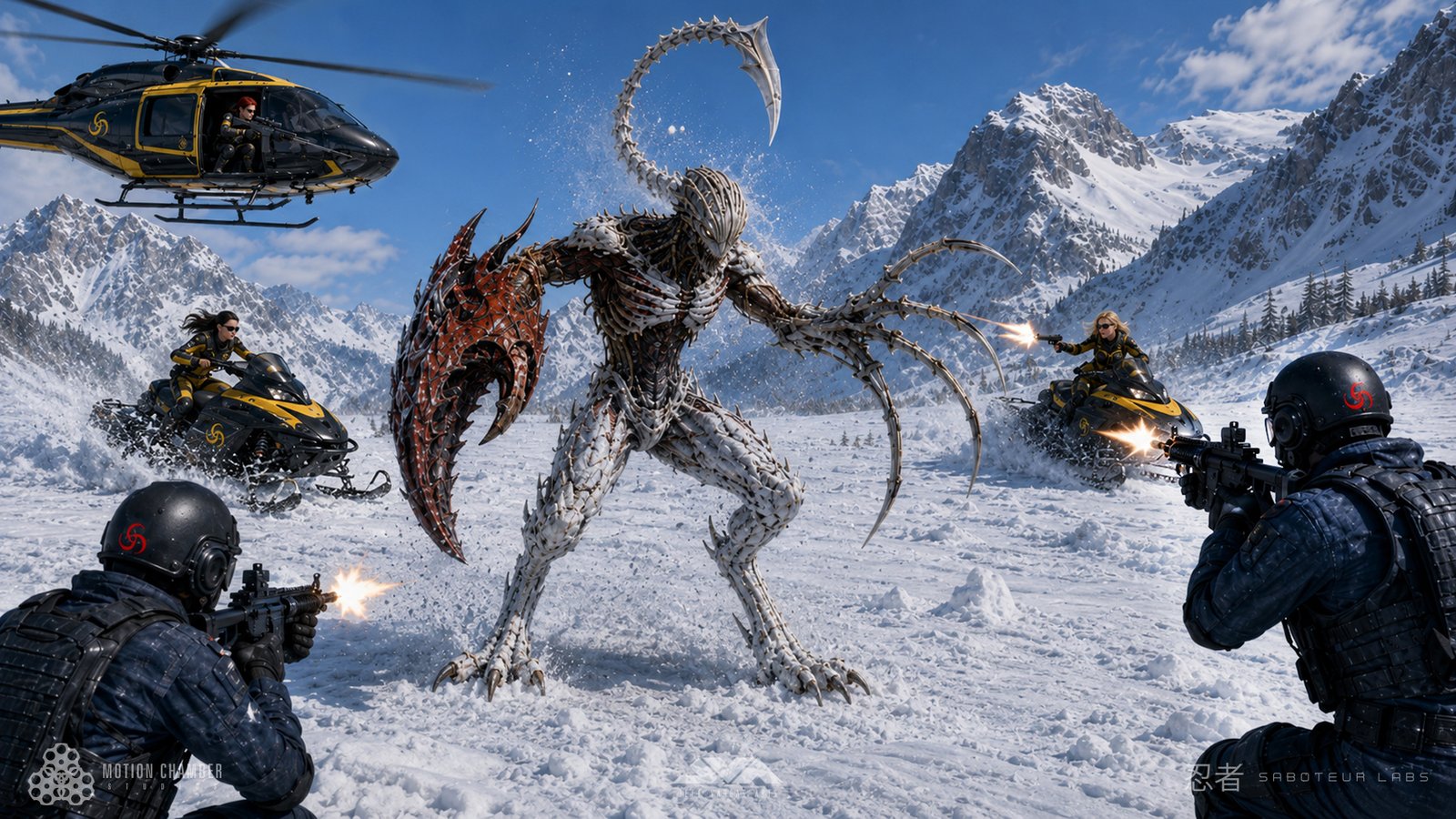

Bones is a hyper-adaptive genetic weapon engineered by The Machine to survive conditions no ordinary organism could endure. His body operates through pre-conscious adaptive morphogenesis, responding to threats before deliberate thought can catch up. He does not choose powers in any conventional sense; his tissues identify the problem and begin manufacturing the answer.
His dominant visual language is osseous. Bone, cartilage, tendon, dermal plating, and internal crush structures reorganize into armor, weapons, traction systems, sensory organs, or camouflage as needed. His singular secondary spine is part stabilizer, part sensory structure, part weapon platform, and a central component of the biological command network controlling his transformations.
Bones can survive devastating ballistic trauma, explosive force, and limb loss through near-real-time regeneration. Damage still matters: sustained heavy fire can dismember, destabilize, or temporarily overwhelm him, but once he regains structural control his body seals wounds, rebuilds missing anatomy, and adapts against whatever caused the injury.
Detached tissue cannot grow into another Bones. His Somatic Sovereignty system reserves full-body regeneration for the primary organism, while severed parts rapidly shut down, calcify, or break apart. He is nearly impossible to kill, but every adaptation and repair consumes heat, minerals, fluids, mass, and energy, making prolonged destruction one of the few reliable ways to slow him.